
Tell the Dear Fathers community more about who you are and what you do?
19% more youth go to college or university when they’ve had a Black teacher in their lives. This is why I’m a firm believer in having our Black community teach one another how to grow and build positively upon the knowledge of previous generations.
When I read this research, it was disheartening to reflect on the fact that I had absolutely no Black teachers in my school life.
And to think that I wasn’t alone in this statistic…made me realize that we need more role models that look like us in leadership spaces that affect our Black youth in their early years.
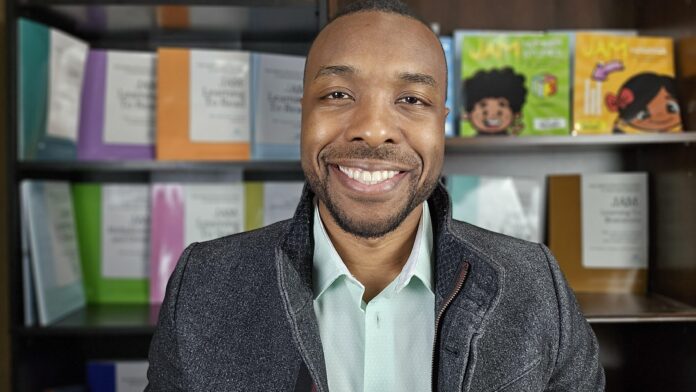
I am a husband, father of two, founder, speaker, entrepreneur, author, musician, YouTube channel host, and community builder. My organization, JonAyves Learning Club, exists to provide 1-on-1 virtual tutoring that helps youth from Kindergarten to Grade 12 improve their reading, writing, and math skills.
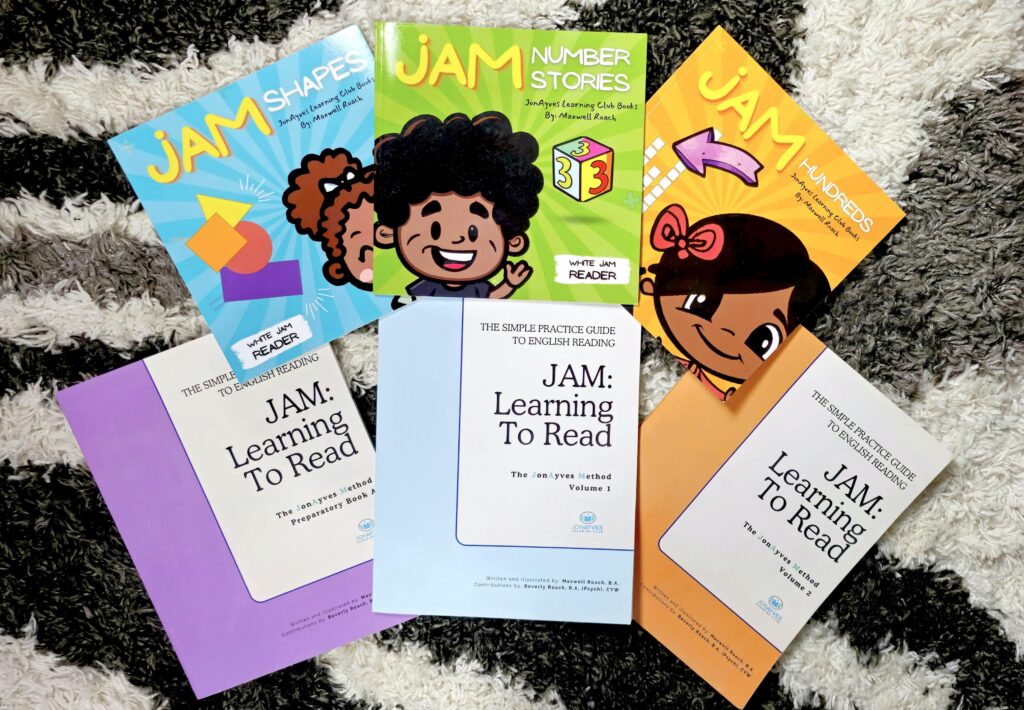
Uniquely, we work with hospitals, school boards, children’s support organizations, and families to deliver sessions using the 30+ curriculum books I’ve written, primarily with Black instructors on our team.
I spend a lot of time discussing parenting, education, technology, and the challenges facing children today, while navigating the additional layer of being Black in the world today.
Teachers are increasingly speaking out about burnout, lack of support, and feeling undervalued. What do you believe is driving the teacher burnout crisis, and how is it ultimately affecting our children?
This has been interesting because I began a YouTube channel about 5 months ago, in mid-May 2026. The topic seemed to be hot enough that it garnered over 1 million channel views within that timeframe alone.
From the thousands of conversations that I’ve sifted through, there are a number of perspectives on teacher burnout. Parents, students, and youth professionals are all a part of this conversation.
One common highlight I’ve noticed is that society may have reached a point where there is an expectation for teachers to take on responsibilities that go far beyond teaching.
They’re expected to educate children within a 20+ student classroom, manage behavioral diagnoses, support emotional needs, de-escalate and resolve physical conflicts, manage paperwork and documentation, communicate to many parents with varying personalities, and somehow make sure every child succeeds (even when students are coming into the classroom without the foundation laid for them at home.)
That’s a tremendous amount of responsibility to place on one person, who wouldn’t necessarily be in a position that is respected as a traditional “leadership role”.
The unfortunate truth is that parents are also burdened by the state of economics, which means that they are working multiple jobs just to keep the lights on. The question then becomes, “How do I find more time for my child as a parent, if I need to prioritize keeping food on the table?”
It ends up being the students who pay the price when teachers and parents are exhausted, which makes the topic more nuanced than simply, “Teachers need to be paid more,” or “Parents simply need to stop being lazy and raise their kids.”
The combination of all of these factors seems to contribute to teachers leaving the system, the quality of education declining, and students not receiving the education that they need. Add in the complexities for Black youth and it can look like an unsolvable state of affairs.
Has society placed too much responsibility on parents without giving them the resources, support, and tools they need to raise successful children?
The answer here might be yes, but it’s a wide conversation from what I’m seeing.
Parenting has become increasingly complicated. Gone are the days of the standard “American Dream” where parents would go to work 9-5, be home by 5:30, and be with your family for the evening.
Traffic alone doesn’t allow for this to be a possibility, not to mention that more adults than ever have a side hustle.
Families are dealing with financial pressures, demanding work schedules, technology, changing social expectations, and an education system that can be difficult to navigate.
Some parents genuinely don’t know how to support their children’s learning, especially when their child is struggling with something they themselves may have struggled with growing up.
During the busy seasons in my organization, I end up speaking to 100+ parents per week. Almost all of these parents (myself included) didn’t have their own parents helping with homework or navigating the school system. We just did what the teacher told us and then showed our parents the report card (some of us may have hid them, but that’s a different conversation.)
We are in an information age. Resources, knowledge, and tools are available at the click of a button. More accurately, I would say that the requirements for being a successful adult have shifted, which then affects how parents prioritize their duties.
Unfortunately, children’s education seems to be ending up lower and lower on that list, whether by force or by choice.
Technology, social media, and AI are changing how children learn, communicate, and develop. Are we preparing our children for the future, or allowing technology to raise them?
In Western culture, I would actually say that technology is raising all kids, for better or for worse. From what I see from my own kids, it is definitely for the better.
I’ve been attending a number of panels lately discussing technology, AI, and student education. Since this is a relatively new topic in education, even those who are highly qualified are unsure of how to navigate this effectively.
The reality: Technology is here, kids are growing up in it, and there’s no stopping it.
That being said, technology has tremendous benefits. We wouldn’t be having these conversations without it. Kids also now have access to information, resources, and opportunities that previous generations could only imagine. AI is creating even more possibilities.
I can take my son as an example. He is 9 years old and we recently went to a 3-day conference about space and earth observation. He had the opportunity to have discussions with experts and leaders who have launched satellites into space.
The shocking part for me was that his conversations weren’t at his grade level. He is an avid user of technology, which gave him the ability to acquire knowledge over the years and ask real and meaningful questions. These leaders were thinking about potential solutions based on their conversations.
As parents, we hold a quite powerful position in guiding children down the path that is unique to them. Though if we aren’t mindful, the social media algorithms can raise our kids for us in a direction that may not be as fruitful.
We’re seeing more conversations about children’s anxiety, depression, learning disabilities, and declining confidence. What do you believe is happening with this generation of children that previous generations may not have experienced to the same degree?
When I was a kid, TV was the technology that everyone was worried about. Sitting too close to the TV, watching hours of content, and letting the TV raise kids.
However, in those days, we didn’t have the same degree of personalization that exists today. We were generally all watching the same shows, listening to the same music on the radio, and participating in a number of similar activities.
There seems to be a lack of conversation with regards to the connection between personalization through devices and social media algorithms, and existing in a 25-student classroom.
This is a 180 degree shift in environment on a daily basis for children. Kids go from comfortably scrolling on TikTok and YouTube through content that is personalized and spoon-fed, to needing to exist in a classroom where they don’t get nearly the same attention – not because the teacher should provide it, but because the system isn’t built for this.
It also wasn’t an issue that parents needed to worry about in previous generations.
We’re currently working on research with hospitals to find correlation between mental health, student well-being, and school attendance rates. Our hypothesis is that 1-on-1 academic support will improve the mental health of students, and, in turn, improve attendance rates for students.
Simply put, if they feel confident in a safe and private space, they will perform and be confident in a public space (ie., the classroom.)
The shift to personalization as a societal standard (whether intentionally or unintentionally) has been quite the slept-on perspective of the conversation.
Are traditional education systems actually equipping children with the critical thinking, financial literacy, emotional intelligence, and real-world skills they need to succeed?
There has been a big shift in how education is delivered. I am also a big fan of traditional education systems.
Though, if we classify the current state of education as traditional, that may be unfair to how schools used to be.
For example, when I speak to parents about their child’s learning, they question why there is little to no homework coming from school. We can talk through the research about how effective (or ineffective) homework is for kids, though there will always be an argument for “practice”.
I toured the world as a musician for over 15 years and I wouldn’t have been granted any opportunities without practice and repetition. This experience leads me to the question: If students aren’t getting the opportunity to dig into projects at home in a private environment, how can we expect them to learn a skill or digest the content during the few minutes at school?
To me, traditional education would equate to the education I received when growing up. Translating this to critical thinking and financial literacy, these are skills that need to be acquired, meaning that they need to be practiced. There are reasons why the system has strayed from this, though the current results are showing that a change needs to be made in order to improve on the education for students, especially since the advent of AI.
How important is a father’s involvement in his child’s education, confidence, and development? What impact can an absent or disengaged father have beyond the household?
Instead of making broad strokes on the importance of fatherhood, it may be more impactful for me to talk from a personal perspective. I can appreciate how anyone may decide to organize their household.
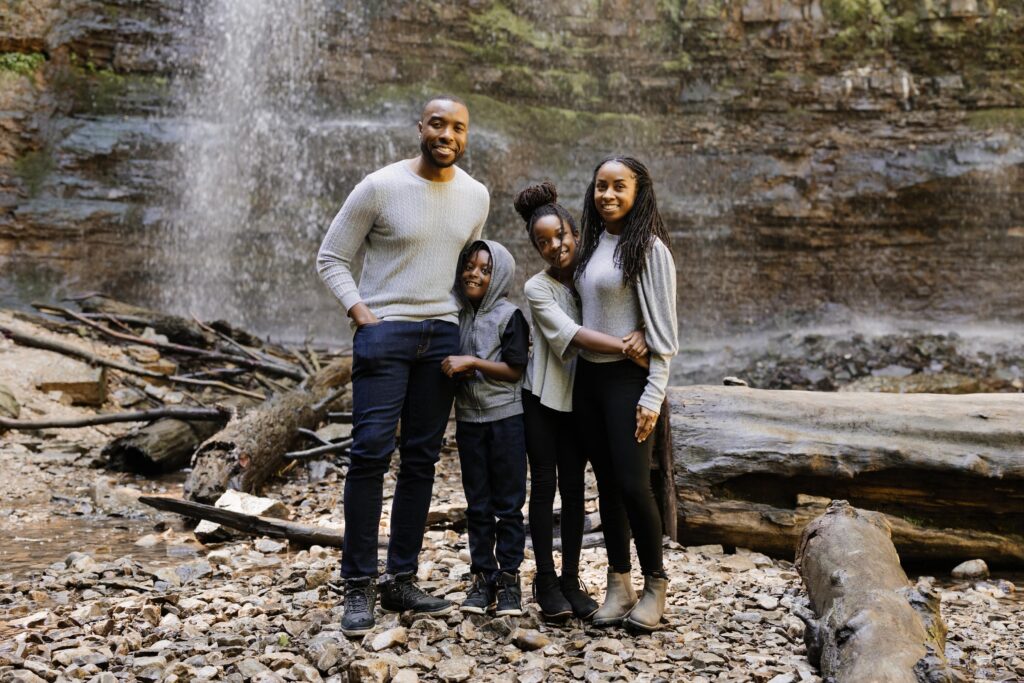
We have a fairly traditional household. I would be considered the breadwinner and my wife takes care of the home. I’ve created a vision for our household, affirmed it with my wife, and I lead execution of this vision, keeping it at the forefront to lead our decision making as a family.
In our home, this understanding has led to many final decisions falling onto my shoulders in a variety of situations. One of these areas happens to be education, and is also one of the reasons why I started my organization. It was imperative that my children saw my intensity in the importance of education.
My kids have been doing long division since they were the age of 3. This was by design, since part of the vision was to ensure that our kids had a love for learning, while keeping them ahead of the game. Especially as Black individuals, being ahead of the game is an unsaid requirement in society.
When I see all of the work that my wife has to do for the family, it is clear that my role is to continue steering the ship towards the destination. In no world would I expect my wife to do everything that she does, while making sure that the high level vision stays intact.
This is where I come in as a father. In fact, this is one of the reasons why I left the music industry: I couldn’t be in Japan while my kids were at home. When I speak, they need to know that it will always have follow-through attached to it. When I plan, they need to know that the outcome will be what was intended. If I’m not there for them to witness this (and be a part of it), they won’t have an appropriate model within nor outside of our household.
Are we becoming too accepting of parents being disengaged from their children’s education, behavior, and emotional development? Where should we draw the line between understanding parents’ struggles and holding them accountable?
It’s interesting because from the thousands of conversations and opinions that I’ve heard from teachers and parents, there doesn’t seem to be a consensus on where the line sits. If students aren’t being sent to school with the tools to thrive in the environment, then one could argue that we may need to hold parents accountable in how they set their kids up for success in the education environment.
I do personally believe that I am responsible for how my children present themselves at home and in public. There is no corporal punishment in our home, though our kids certainly know what the expectations are at school and at home. We owe it to them to prepare them with these tools as parents.
From speaking with many parents, there seems to be a common theme that it has become increasingly difficult to control their kids. This may be one of the areas where parents should be held accountable, considering that it is our responsibility to guide our children.
If I’m looking at this historically, involvement in a child’s education would not necessarily dictate success. However, if the classroom is filled with students who do not allow teachers to do their jobs (which would be to teach), then addressing the source may be the best course of action.
Are Black children receiving the same opportunities, attention, resources, and expectations as their peers? What needs to change at home, in schools, and within our communities?
When I was a child, I remember the news being on in the home, only to see yet another Black man being arrested for something every day.
Or it was another music video about women, cars, money, and clothes.
Or it was another sports figure advertising a new shoe or brand.
Or another rapper doing what they do.
I never had the luxury of seeing dentists, doctors, astronauts, or entrepreneurs on TV that could act as my role model when growing up. If I did, then they were few and far between.
We have more opportunities to see this now, but let’s be honest: The generic algorithm on social media does not promote these figures readily.
We continue to hear the cry that “We need Black teachers”, but for some reason, something is not clicking.
I didn’t know that there were so many science, business, and education students in top-tier colleges and universities across North America until I started my organization. It didn’t even cross my mind.
This is not only important for the Black community – it leaves an impression on other communities as to what to expect from us when we walk into a room. It may not be fair, but it’s how it is.
Every morning that I’m given the opportunity to wake up and try my hand again as a Black man, I’m faced with the reality that when I walk into a room, there is a preconceived notion of what I sound like, act like, what music I listen to, and what I value. It’s not until I begin to speak that the walls come down.
In many scenarios, that is much too late and I may have already been shut out from opportunities.
This happens in the classroom as well – preconceived notions about who our Black children are. Some say that it is on the other parties to fix this within themselves, though I come from a background of never depending on anyone to pave my way.
Change can start at home, and I’m living proof of this – It is the environment where I have direct influence. From the content that my children ingest, to the food that they eat, to the clothes that they wear. The more intentional that we are about this process, the more change we will be in complete control of.
Between technology, convenience, participation trophies, and parents wanting to protect children from failure, are we creating a generation that struggles with resilience, discipline, and accountability?
This is something that I’ve heard quite a bit over the years.
The simple answer is not to worry about the outcome in any situation. As long as the process is correct, the outcome will be favorable over time. It may not be immediate or in a time frame that is expected, but it will show up.
And to be honest, in our programming, we don’t focus on those results either. Students know that they are accountable to their instructors. As long as there is a framework set up for them, they tend to adhere.
The problem may not necessarily be with any one institution, group, family, or student – from where I’ve been sitting over the last few years in this organization, the framework is everything. Create the boundaries so that resilience, discipline, and accountability are baked in naturally.
I encourage my kids to not look at the trophies and to look at the progress.
After more than 60,000 tutoring sessions and countless conversations with parents and educators, what have you learned about what children really need from the adults raising and teaching them? What is one thing every parent should start doing differently?
Something that may sound a bit counterintuitive: Lower the expectations for your child.
The reason why I say this is because it creates an interesting pathway for parents to also lower their own expectations of themselves. Let’s take going to the gym as an example.
Consistency will always beat intensity. The person who does small amounts of exercise daily will outpace the person who may do heavy lifting quite intermittently. Not only will they be in better physical shape, they will also be training their mental mindset to value consistency. And doing this in small batches can make it easier to digest.
The same goes for education, especially at home. When we perform sessions, they are generally between 15-20 minutes, at a maximum of 30 minutes for older students.
Why? Because we value frequency. Better to do 2-3 days per week at 15-20 minutes, than to do one 1-hour long session. These are just the results that we’ve seen and have allowed for families to be with us, with the same instructors, for over 3 years.
To make this actionable at home, instead of making your child read for 30 minutes, have them read two sentences and then go out to play. Then, after a few days, increase it to three sentences. And so on.
The same can be said for math, spelling, writing, etc.
Children don’t necessarily need elaborate educational programs, expensive resources, or adults who know the answer to every question.
They need adults who pay attention, set expectations, encourage them, remain involved, and give them work that they can handle. Not only does this make it easier for the kids, but also for the adults. Spending a few minutes of quality time will always win over longer, unfocused time.
If you could change one thing about how we raise, educate, and prepare the next generation of children, what would it be, and why?
We live in a different world than even just a year or two ago. The way that we raise our children seems to matter more now than ever before. The worries as a parent are more nuanced than simply having your child come back before the street lights come on.
These days, education can start at home – and it is almost as simple as resetting the social media algorithms on devices. I do this in intervals to ensure that I’m only getting the content that I need, instead of what I may have needed 7 or 8 months ago. This helps me to continue being reinforced in my goals and direction.
It is the same for children. I create calendars for my kids with specific scheduling in order to keep them moving towards our goals. At times, we need to review, reset, and recreate. Especially being a Black father, I take full responsibility for educating my children on what to expect, and how much extra work they need to put in, in order to just meet the bare minimum. Unfortunate, but true.
Fostering this at home is key to preserve our strengths as a Black community. I’m a proud Black man and our culture is very influential. At times, I do wish that we could use this power for more good, but we have come a long way and I plan to continue pushing the barrier when it comes to youth learning and advocacy within (and outside of) our community.
How can people follow and connect with you?
I’ve just introduced a series called The Parent Lounge, where we have conversations with parents about their experiences raising children. @JonAyvesLearningClub on YouTube.
On this channel, we have conversations about parenting, education, technology, family relationships, and many of the challenges affecting children today.
People can learn more about our work at www.jonayves.com, where we provide 1:1 virtual tutoring for children from Kindergarten through Grade 12.
And you can connect with me personally on LinkedIn by searching Maxwell Roach.
I’m always interested in connecting with parents, educators, and people who care about improving the lives and educational experiences of children.