
Tell the Dear Fathers community more about who you are and what you do.
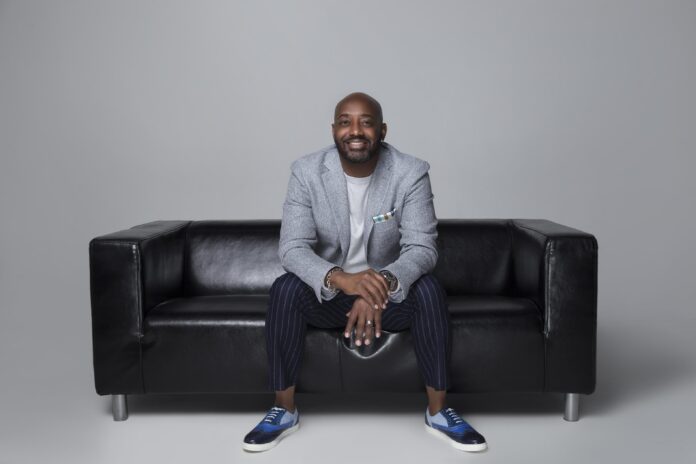
I am Larry C. Hill Sr.—a husband, father, senior technology executive, life coach, author and founder of 5230 Man In Progress.
But titles only tell you what I do. They do not tell you who I had to become to do it.
I am a man who has survived the murder of his father, the death of his daughter, the ending of a marriage, personal failure, grief, leadership pressure and the painful work of rebuilding. For years, I thought surviving those experiences meant I had healed from them.
It did not.
Survival taught me how to keep moving. Healing required me to ask who was doing the moving—and what was still making my decisions.
Today, my work helps people confront the hidden influences behind their choices so they can stop performing, stop living on autopilot and start becoming on purpose.
I am not speaking as a man who has arrived. I am speaking as a Man In Progress who is willing to leave evidence along the way.
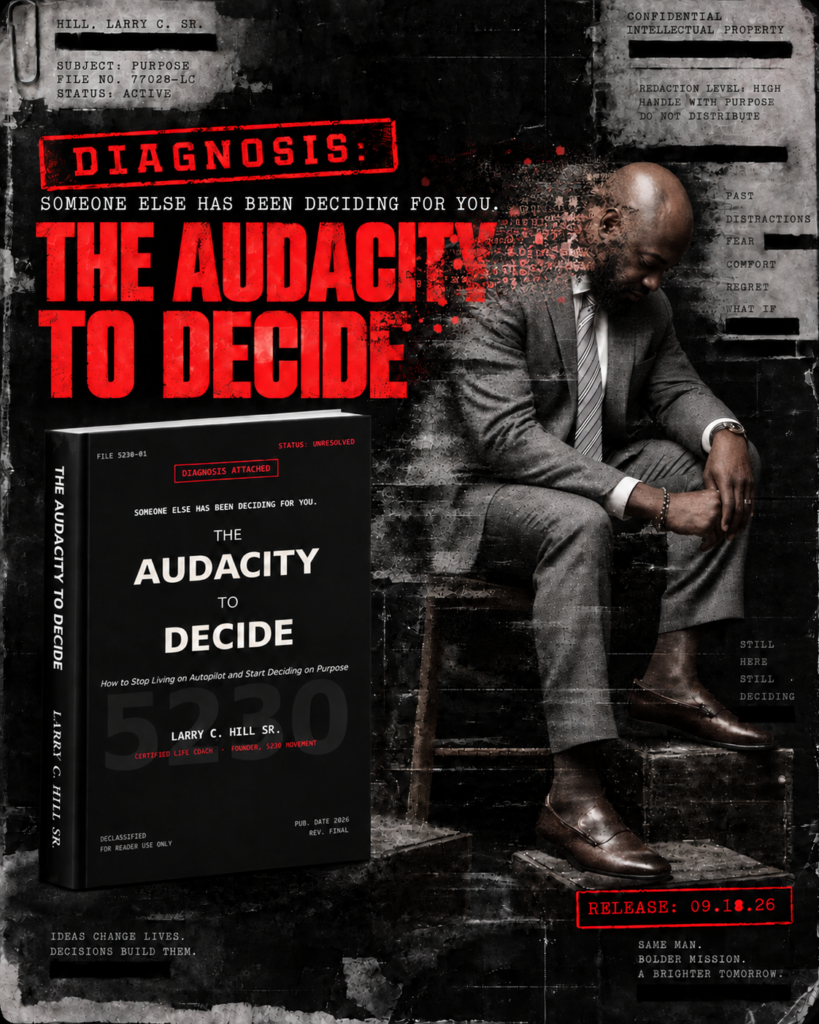
What inspired you to write The Audacity to Decide?
I wrote The Audacity to Decide because I discovered that some of the most intelligent, successful and spiritually grounded people are not lacking information.
They are negotiating with truth.
They already know the relationship has changed. They know the apology is overdue. They know the boundary is necessary. They know the dream keeps calling them. They know the version of themselves they are maintaining is becoming too expensive to survive.
But knowing feels safer than choosing because choosing introduces consequences.
I know that tension personally. I could lead complicated transformations, manage risk and make consequential decisions professionally while postponing truths in my personal life that did not require another meeting, another prayer or another sign.
The book was born from one surgical question:
What if you are not confused? What if you are using confusion to postpone the responsibility that comes with clarity?
What are the top three takeaways you want readers to get from your book?
First, every decision has an author.
If you do not identify what has been making your decisions, fear, trauma, loyalty, survival, perfection and inherited expectations will keep signing your name.
Second, knowing is not the destination.
Knowing is the moment revelation creates responsibility. Once you see the pattern, you can no longer pretend you are only its victim. You must decide whether it gets another vote.
Third, one decision can interrupt a pattern, but consistency creates a new identity.
That is why the framework is:
Name it. Trace it. Weigh it. Choose. Repeat tomorrow.
Name what is influencing the decision. Trace where it came from. Weigh what allowing it to remain has cost you. Choose what truth requires now. Then repeat the decision until it becomes part of your identity.
You do not transform your life by making one emotional promise. You transform it by repeatedly voting for the person you have decided to become.
What is the meaning behind your organization, 5230 Man In Progress?
5230 represents 52 years of life and 30 days of intentional transformation.
Man In Progress is my rejection of the pressure to appear perfected.
Men are taught to present the finished product while hiding the construction site. We show people the title, the house, the marriage, the strength and the success. We rarely show them what is still being repaired underneath it all.
5230 creates space for a man to tell the truth about where he is without turning that truth into permission to remain there.
Being in progress does not mean I am incomplete, irresponsible or incapable. It means I have stopped lying about being finished.
Perfection is about protecting an image. Progress is about developing an identity.
Our mission is to eradicate the perception of perfection and embrace the grace of progress—one man, one family and one city at a time.
What was your relationship with your dad, and how did that impact the man you are today?
My relationship with my father was interrupted before I had the opportunity to fully know him. I was four years old when he was murdered, and I witnessed his death.
I knew his absence longer than I was allowed to know him.
At four, I did not have the language to explain trauma, grief or abandonment. But my life began interpreting what happened before my mouth could name it.
His absence became one of my earliest teachers. It shaped how I understood safety, strength, vulnerability and manhood. It taught me how quickly someone you love can disappear and how a child can carry questions he is not old enough to ask.
Losing my father also taught me something I carry into my own fatherhood:
A father’s presence is not a small thing. It becomes part of the architecture of a child’s identity.
That presence cannot be measured only by whether we live in the house or pay the bills. Our children need emotional access to us. They need our attention, our truth, our affection and sometimes our apology.
I am becoming the father I never thought I needed.
Who is Larry C. Hill as a father?
I am becoming the father I never thought I needed.
For years, I measured fatherhood by what I could provide. I believed that if the bills were paid, the problems were handled and my family was protected, I was doing my job.
But becoming a father exposed needs in me that the four-year-old boy who lost his father never had the language to name.
I needed a father whose voice I could hear from the sidelines. I needed a father who was emotionally available—not merely financially responsible. I needed a father who could pray with me, listen to me, apologize to me and make his love impossible to question.
So that is the father I am intentionally becoming for my children.
On weekends, I am probably the loudest and most present father at the game, match, performance or school event. My children do not have to search the crowd to determine whether I showed up. They know my voice from the sidelines because I refuse to make my support something they have to assume.
I want them to see it. I want them to hear it. I want them to feel it.
When work requires me to travel, my fatherhood does not remain at home. I call every morning and every night. I check on my children, listen to what happened in their world and pray with them.
Distance may change my location, but it does not excuse me from participation.
My children should never have to compete with my career for evidence that they matter.
I am also the father who is learning that strength can listen. Strength can be affectionate. Strength can change. Strength can admit, “I got that wrong, and you deserved better from me.”
I am not a perfect father. I am a present father who is willing to repair—and a Man In Progress who understands that providing for my children is not the same as becoming the man they need to experience.
Because I know what it feels like to grow up without my father’s voice in the room, I have made a decision:
My children will never have to question whether their father was in their corner.
They will have evidence.
And every day I give them that evidence, I am not only becoming the father they need.
I am becoming the father I never thought I needed.
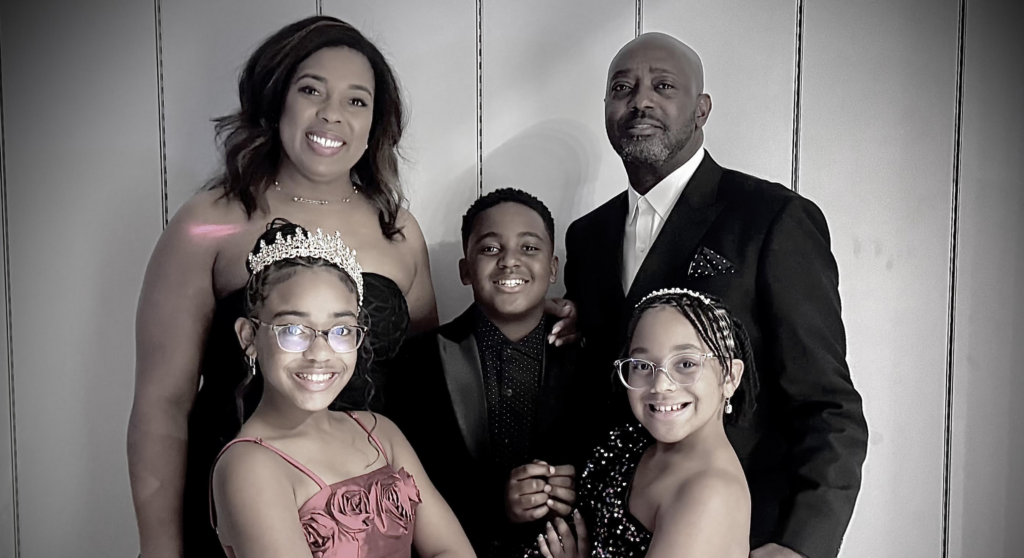
How did your fatherhood experience help you write your new book?
Fatherhood helped me write The Audacity to Decide because it forced me to confront two devastating truths:
A father can lose a child to death.
And a father can still have a living child while being forced to negotiate the place and value of that relationship after divorce.
I have lived both—with two daughters I love.
I experienced the unimaginable devastation of losing my daughter, Trava, to death.
There is no language large enough to explain what happens inside a father when his child dies. You do not simply grieve the person you lost. You grieve every birthday that will never arrive, every conversation you will never have, every milestone you will never witness and every future in which you expected to see your child.
Trava’s death changed my relationship with time. It taught me that tomorrow is not promised—and that carrying love for someone in my heart is not the same as ensuring they experience that love while I still have the opportunity to give it.
But death was not the only way I experienced disruption in fatherhood.
After divorce, I had to navigate the painful reality of my relationship with my daughter Logan—now 22 years old—changing.
I had to negotiate what my presence looked like, where I fit and whether the value of a father-daughter relationship could somehow be reduced because the relationship between two adults had ended.
That kind of loss is different.
The love is still alive. The daughter is still alive. The fatherhood is still alive. But access, proximity and participation can change.
Divorce can end a marriage. It should never be allowed to erase a father.
It should not reduce fatherhood to a schedule, a payment or occasional permission to participate. And it should never force a daughter to measure her father’s value by what happened between her parents.
With Trava, I had to grieve a future that death permanently removed.
With Logan, I had to grieve, fight for and redefine a father-daughter relationship that divorce changed—but did not make disposable.
One experience taught me that time can be taken. The other taught me that access can change. Both taught me never to treat presence as guaranteed.
Those experiences forced me to ask: What do you do when life makes a decision you did not choose? Who do you become when a role you value is altered by circumstances you cannot completely control? How do you remain a father when fatherhood no longer looks the way you believed it would? And how do you prevent pain from making your next decision?
Fatherhood taught me that my children do not only inherit what I intentionally teach them.
They can also inherit what I refuse to confront.
My silence can become their language. My unhealed grief can become emotional distance. My bitterness can become their burden. My survival habits can become their definition of normal.
So I had to decide that neither death, divorce nor disappointment would be allowed to write the final definition of me as a father.
I could not change everything that happened. But I could decide what was allowed to keep happening inside me because of it.
Sometimes the decision is not whether the painful thing happened. It did.
The decision is whether what happened to you will be given permission to keep happening through you.
Fatherhood made that decision personal.
Because legacy is not only what I leave my children when I die.
Legacy is what my children experience because I decided to heal while I am still alive.
How do you balance being a founder and author while being the best dad you can be?
I do not believe balance means giving everything an equal amount of time.
I believe balance is having the courage to decide what will not be sacrificed.
There will always be another email, meeting, chapter, interview, opportunity or deadline. There will not always be another conversation with my wife, game with my children, ride in the car, bedtime prayer or unexpected moment when someone I love decides to let me into their world.
So I have made a decision:
My family will not become the sacrifice I place on the altar of my purpose.
My wife and children cannot continually receive the leftovers of a man the rest of the world experiences at his best.
Jasmine should not have to compete with my calling for access to her husband. My children should not have to compete with my career for evidence that they matter. None of them should have to interpret my emotional absence as the price of my success.
That does not mean I always get it right. The real work is recognizing when ambition has stopped serving my family and started competing with them.
I cannot write about transformation while refusing to change at home. I cannot build a movement centered on presence, healing and accountability while becoming emotionally unavailable to my wife and children.
That would not be purpose. That would be performance wearing purpose’s clothes.
Being a husband also reminds me that my children are learning more than fatherhood by watching me. They are learning what partnership looks like. They are learning how a man communicates, repairs, sacrifices, listens and loves when marriage requires more than romance.
Jasmine deserves more than a man who is admired publicly.
She deserves a husband who is accountable privately.
When I am at my children’s games and matches, I am engaged, involved and probably the loudest father on the sidelines. When work requires me to travel, I call home every morning and every night. I connect with my wife. I listen to my children. I ask questions, stay involved and pray with them.
Distance may change where I am, but it will not change whether I show up.
The success of 5230 Man In Progress cannot only be measured by books sold, interviews completed, stages reached or people inspired. It must also be measured by the evidence inside my home.
Does my wife feel chosen? Do my children feel heard? Do they feel safe? Do they know I am proud of them? Do they recognize my voice from the sidelines? When miles separate us, do they still experience my presence?
That is how I measure balance.
Not by whether I managed to do everything.
But by whether the people I am doing it for still experienced the best of me while I was doing it.
What else would you like our audience to know about the upcoming release of your book?
I want the Dear Fathers community to know that The Audacity to Decide is not a motivational book designed to make you feel powerful for a weekend.
It is a confrontation disguised as a book.
It will not simply ask what you want next. It will ask what has been making your decisions until now.
Fear? Trauma? Loyalty? Survival? Perfection? The expectations you inherited from people who never had to live with the consequences?
The book releases September 18, 2026, but I did not write it to give readers more information. Most of us are already surrounded by information.
I wrote it for the person who has read the books, heard the sermons, attended therapy, listened to the podcasts and collected enough advice to explain the pattern—but still has not interrupted it.
Because information can describe your cage without ever requiring you to leave it.
Early readers have told me they had to put the book down because it forced them to confront truths they were not ready to address. Some men said the material triggered them. One reader initially skipped the questions at the end of each chapter, then realized she needed to return and answer them. Another woman asked whether I had written the book specifically for her.
I did not take any of that as criticism.
This book was not written merely to be finished. It was written to interrupt something.
I am not promising that every page will feel comfortable. Comfort may be the very thing that has allowed the pattern to survive.
But I am promising that the book will help readers identify the hidden operating system underneath their choices and give them a practical process for reclaiming authorship:
Name it. Trace it. Weigh it. Choose. Repeat tomorrow.
For fathers, the stakes are even greater. The decision we postpone does not always remain contained inside us. It can become the atmosphere of our home, the language of our children and the inheritance of the next generation.
The question at the center of this work is:
Who has been signing my name?
The Audacity to Decide is for the person who is tired of being chosen for a version of themselves they can no longer survive maintaining.
This is not a book about having all the answers.
It is about finally honoring the answer you already have.
What does legacy mean to you?
For a long time, I thought legacy was what a man left behind.
Money. Property. A business. A recognizable name. Opportunities his children did not have to create from nothing.
Those things matter. But legacy is not only what I leave for my children.
Legacy is also what I refuse to leave inside them.
I can leave my children money and still leave them wounds. I can give them access to opportunities while handing them survival patterns. I can teach them how to become successful without ever showing them what it looks like to become emotionally whole.
I do not want to give my children everything I never had while accidentally withholding everything I never knew I needed.
Legacy is not created at the end of my life. It is being formed in my home right now.
It is in the way I speak to my wife when we disagree. It is in whether my children feel safe telling me the truth. It is in whether my pride is more important than my apology. It is in whether the people closest to me receive my presence—or only the provision my absence produces.
I do not want my children’s greatest testimony about me to be that I worked hard.
I want them to say:
My father was present.
My father prayed with us.
My father believed in us loudly.
My father admitted when he was wrong.
My father did not make us carry the pain he refused to address.
My father kept becoming.
Legacy is more than what people say about you when you die.
Legacy is what the people who lived with you have to heal from—or no longer have to heal from—because you were willing to do the work.
The greatest inheritance I may ever give my children is not something they can deposit into a bank.
It is freedom from something they never have to recover from.
And I want to be clear: none of this is the testimony of a man who has perfected fatherhood, husbandhood, healing or legacy.
I still miss moments. I still have apologies to make. I still recognize patterns later than I wish I had. I still have days when the man I am becoming has to confront the man I learned to be.
All of this—not perfected, but in progress.
Progress does not mean I always get it right. It means I no longer use imperfection as permission to avoid responsibility.
I return. I repair. I choose again. I repeat tomorrow.
That is the legacy I want my children to witness—not a father who pretended to be perfect, but a father who gave them evidence that transformation remains possible.
What continues because I lived. What changes because I loved. What finally ends because I confronted it. And what becomes possible because I kept progressing.
How can our audience purchase your book?
The Audacity to Decide releases September 18, 2026, and readers can find current preorder and purchasing information at:
https://5230maninprogress.com
Amazon: https://www.amazon.com/dp/B0HG421JP1
The book will be available through Amazon and Apple Books, as well as additional online retailers, in paperback and digital formats.
But I want to be honest about what I am inviting people to purchase.
This is not a book to rush through so you can say you finished it.
Bring a pen. Sit with the questions. Give yourself permission to pause. And most importantly, bring your honesty.
The real value of this book will not be measured by how quickly you reach the final page.
It will be measured by what can no longer continue unchanged after you tell yourself the truth.
Do not buy The Audacity to Decide because you want more information.
Buy it if you are ready to identify what has been signing your name, confront what it has cost you and reclaim the responsibility of choosing what happens next.
The most important decision may not be whether you purchase the book.
It may be what you can no longer pretend you do not know after reading it.
What’s next for you, and how can people connect with you?
The Audacity to Decide is not the conclusion of the work.
It is the front door.
The book helps people recognize what has been making their decisions. What comes next is helping them practice choosing differently until progress becomes part of their identity.
I am continuing to build 5230 Man In Progress into a movement that creates honest conversations and practical resources around fatherhood, husbandhood, emotional health, relationships, faith, leadership, identity and legacy.
The next phase includes the Man In Progress 30-Day Pathway, speaking engagements, media conversations, live experiences and additional books that move people from recognition to responsibility—and from responsibility to repeated action.
Because awareness without a decision can become another form of entertainment.
I do not want people to simply read something powerful, agree with it and return unchanged to the same patterns.
I want the father to go home and apologize. I want the husband to stop hiding behind provision and become emotionally present. I want the leader to make the decision everyone already knows is overdue. I want the person who has spent years surviving to finally ask whether survival is still qualified to lead.
Not building an audience that applauds the language.
Building a community willing to live it.
I want to continue partnering with platforms like Dear Fathers because this work is bigger than a book and too important to remain trapped inside four walls.
Our communities need spaces where men can tell the truth without surrendering their dignity. Where strength and vulnerability are not treated as enemies. Where fathers are celebrated—but also lovingly confronted. Where a man can say, “I am not perfected, but I am in progress,” and then accept the responsibility to keep moving.
People can connect with me through:
Website: https://5230maninprogress.com
Instagram and Facebook: @thereallarrychill
Man In Progress Podcast: @maninprogresspod
The book releases September 18.
But the movement continues every morning a person wakes up and decides that yesterday’s pain will not receive another vote without being questioned.
Name it. Trace it. Weigh it. Choose. Repeat tomorrow.
Because the question is no longer simply, “What happened to me?”
The question is:
What will happen through me—and what will finally end with me—because I had the audacity to decide?