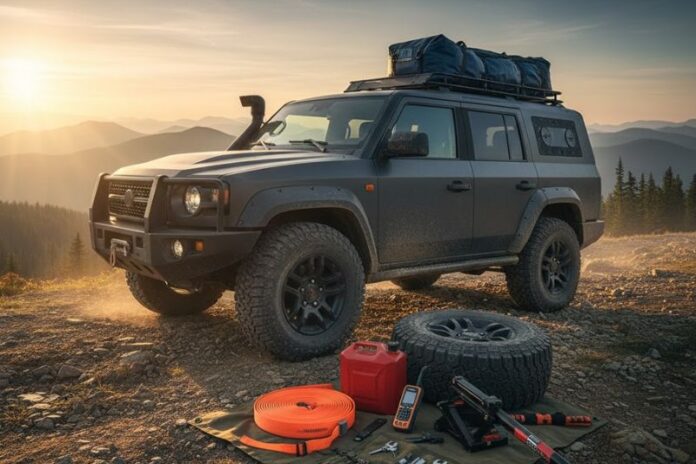

Challenging off-road routes reward solid planning more than luck. The terrain can change by the hour, and small mistakes grow fast in remote places. Build your plan around a few essentials, then check your gear with the same care you give your line choice. The goal is simple – prevent problems, and fix the ones you cannot avoid.
Route Research And Permits
Start with maps, land manager notices, and recent trip reports. If your route needs specific hardware or upgrades, you can click here or find another provider of vehicle parts and accessories to line up what is missing. Confirm permit needs and seasonal rules so you do not turn back at the gate.
Schedule around weather, water levels, and daylight. High-country trails can hold snow well into summer. Desert tracks turn risky after storms, when clay turns slick and deep ruts hide under a thin crust.
Build Plan B and Plan C. Note fuel stops and bail-out spurs on a paper map. Share your route with a contact who will call for help if you miss a hard check-in.
Tires And Air Management
Tires do more work off pavement than any other part of the vehicle. On soft sand, a coastal park bulletin advises dropping pressure to roughly 15 to 20 psi and keeping speeds low to protect sidewalls. Pack a quality gauge and a compressor so you can air back up for the highway.
Match tire size and load range to your actual weight. Heavier rigs need stronger carcasses, not just aggressive tread. Inspect sidewalls and bead areas before trips so small cuts do not become big failures.
Practice airing down and up at home. Keep spare valve cores, stems, and caps in your kit. Use stable bases when jacking on uneven ground to avoid slips.
Recovery Gear And Self-Rescue
Carry the basics and know how to use them. A shovel, traction boards, rated recovery points, and a proper strap handle most stucks when paired with good technique. Gloves, a tarp, and a small mat keep you safer and steadier as you work.
Set rules before you pull. Clear the path of bystanders, and agree on hand signals. Test the load with a gentle pull before you commit to power.
Keep weight low and secure. A loose shackle or jack is a missile in rough terrain. Use soft shackles where possible and store metal gear in padded bags.
Communication And Group Travel
Remote routes often have patchy or zero cell service. A trail ethics group recommends traveling with two or three vehicles, since solo driving raises your risk if something breaks. Radios and a satellite messenger make coordination simple and help small problems from growing.
Define roles before the first obstacle. Lead sets pace and checks hazards. Tail keeps eyes on the group and confirms everyone cleared the last section.
Set clear check-in windows with a home contact. Share your route file and a plain-text plan. If you miss a window, your contact knows whom to call and what to say.
Navigation And Power Management
Use layered navigation for redundancy. Paper maps give the big picture when screens fail. Offline GPS apps add precise tracks, while a compass confirms bearings without power.
Name waypoints with plain words you can recall under stress. Mark water sources, gates, and camp spots on both paper and digital maps. Keep a simple log of time, distance, and fuel.
Protect electronics from dust, shock, and rain. Pack a dry bag for tablets and radios. Use short cables and strain relief to keep ports from tearing loose.
Tools And Spares
A few well-chosen tools fix many trail problems. Fit each tool to your exact rig at home, and label odd fasteners so a friend can help without guessing.
- Tire plug kit, valve cores, and a full-size spare
- Lug key, breaker bar, and torque spec note
- Fuses, bulbs, and basic relays
- Hose clamps plus short lengths of fuel and coolant hose
- Duct tape, electrical tape, and zip ties
- Metric and SAE sockets and hex keys
- Fluids in sealed bottles and shop towels
Water, Food, And First Aid
Carry more water and calories than your plan demands. Heat, cold, and stress change how much you use. Choose food that still tastes fine when you are tired and it is dusty.
Build a real first-aid kit and refresh supplies each season. Add blister care, wound irrigation, and a pressure bandage. Take a short medical course so you can use what you carry.
Stage items where you can reach them fast. Keep the first-aid kit and headlamps near a door, not under bins. Store snacks and water where riders can eat without stopping.
Tough routes reward teams that prepare with intention. Build around tires, recovery, navigation, and communication, then layer tools, water, and a simple power plan. When each piece supports the others, you get the freedom to pick harder lines with a clear head and bring everyone home on time.