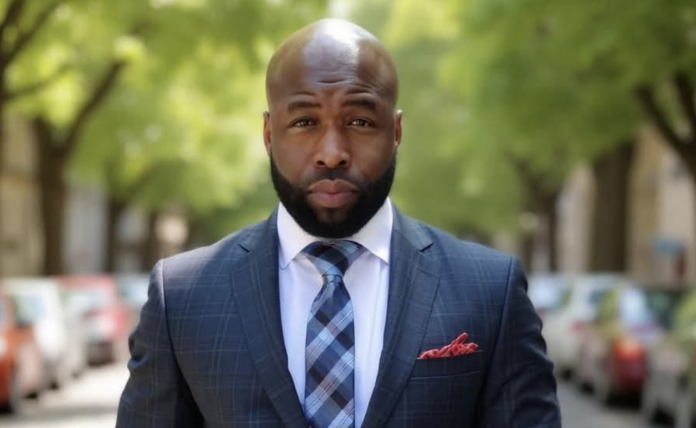

Tell the Dear Fathers community more about who you are and what you do?
I’ve lived through homelessness, mental abuse, and watched addiction eat people alive, watched what someone will do once it takes hold of them. I was forged in a situation most people don’t survive, and the ones who do usually stay gone. They get out and don’t look back. I made a different choice, I’m jumping back into the fire, because somebody needs to be the one who stayed close enough to say “if I made it, you can too, and here’s the roadmap.” I’m Mario Cochran, pen name Mario Jaye, retired Army Chief Warrant Officer Two, 20 years, Bronze Star, MBA candidate, father of four daughters. I wrote This Ain’t About God: Book 1, The Survival Years to put that fire on paper. I’m also building Vet Med Logistics and Toughlove Global Leadership Group, coaching young people on leadership and resilience, because of where I came from, not in spite of it. I’m not trying to be an inspiration story people admire from a distance. I’m trying to be a beacon, an identity shifter, proof that betterment and empowerment are a route, not a miracle.
You grew up in foster care in the Bronx, how did that experience shape the kind of father you wanted to become?
I moved between group homes and foster homes after my grandmother couldn’t keep taking care of me. I go into detail about all of it in my book, This Ain’t About God: Book 1, The Survival Years. People hear “group home” and picture a Lifetime special. The good guy, the bad guy, the secret everybody knows but nobody says out loud, unbelievable hardship wrapped up in an hour with a lesson at the end. Real life doesn’t wrap up. It’s a prison for kids, and the lesson doesn’t arrive on schedule. The lesson is resilience, and you only get it if you survive long enough to learn it.
And once it’s a prison, you have to be honest about what happens inside one. Prison things occur. Kids get violated. Lied to. Manipulated. Fed drugs or watched other kids get fed them. There’s no parole board, no warden checking in. Just station workers and group home staff wearing a badge of care while some of them operate on the same mentality as the people they’re supposed to be protecting you from.
Children don’t survive because someone told them to survive. They survive because they’re too scared to fail. Nobody hands you that fear, it just shows up and does the work courage was supposed to do. I found that fear in those buildings, and I promised myself that if I ever had kids, they would never once have to run on it the way I did. Sometimes both parents are strung out and the home is genuinely the safer place. Sometimes there’s nobody left. I understand that now. But a kid shouldn’t have to learn that the adults supposed to protect them are sometimes the danger. That’s the one thing I built my fatherhood against. Before my daughters ever have to go looking for answers from somebody else, I’m going to be the one who already gave them the truth, with love, with respect, with their good in mind, not mine. Safety isn’t a roof over your head. It’s making sure nobody else ever gets the chance to answer the questions that were mine to answer.
At just 11 years old, you found yourself trying to protect another child from a predator. How did that experience change the way you understood courage, protection, and responsibility?
I was eleven, in a group home, and there was a man on staff everybody called the Bucket Man. I knew what he was doing to another kid in my room, David, because I’d heard it, and once you hear something like that you can’t unhear it. Nobody stepped in. No counselor, no caseworker, nobody. So I did. I’m not going to narrate everything that happened that night, it’s in the book if people want the whole truth of it, but I stopped being a kid who just survived what he saw and became someone who acted on it. That’s the night courage stopped being a feeling for me and became a decision. Protection isn’t something you wait to feel ready for. Responsibility picks you before you’re old enough for it, and you either answer or you don’t. I answered.
When you became a father, what did you consciously decide you would do differently from what you experienced growing up?
What I decided early is that my kids would never have to wonder where they stood with me. But I have to be honest about something most fathers live and few say out loud: the system doesn’t make this easy. A lot of us are the non-custodial parent, and from the very first phone call they sort you into that lane, less information, less support, pointed toward “go get a lawyer” while the other side never hears that line. It’s built to frustrate you, and frustration is the trap. Because the moment you react, you hand them exactly what they were waiting for. Your temper. Your record. Your access to your own kids.
So here’s what I want every father reading this to take with him: the system can take your time, your money, your patience on a bad day. It cannot take who you decide to be in the room with your child. That decision is still yours, every single time. I had to learn that patience isn’t weakness, it’s the one thing they can’t regulate, can’t schedule, can’t put a lane number on. It’s armor you put on before the fight starts, not something you reach for after you’ve already lost it. If you’re a father out there white-knuckling your way through a system that wasn’t built for you, I need you to hear this: you’re not failing because it’s hard. You’re fighting a war most people never see, and the fact that you’re still showing up, still calling, still trying, that’s not weakness. That’s the whole war being won one phone call at a time. Hold the line. Your kids are watching how you carry this more than they’re watching how it turns out.
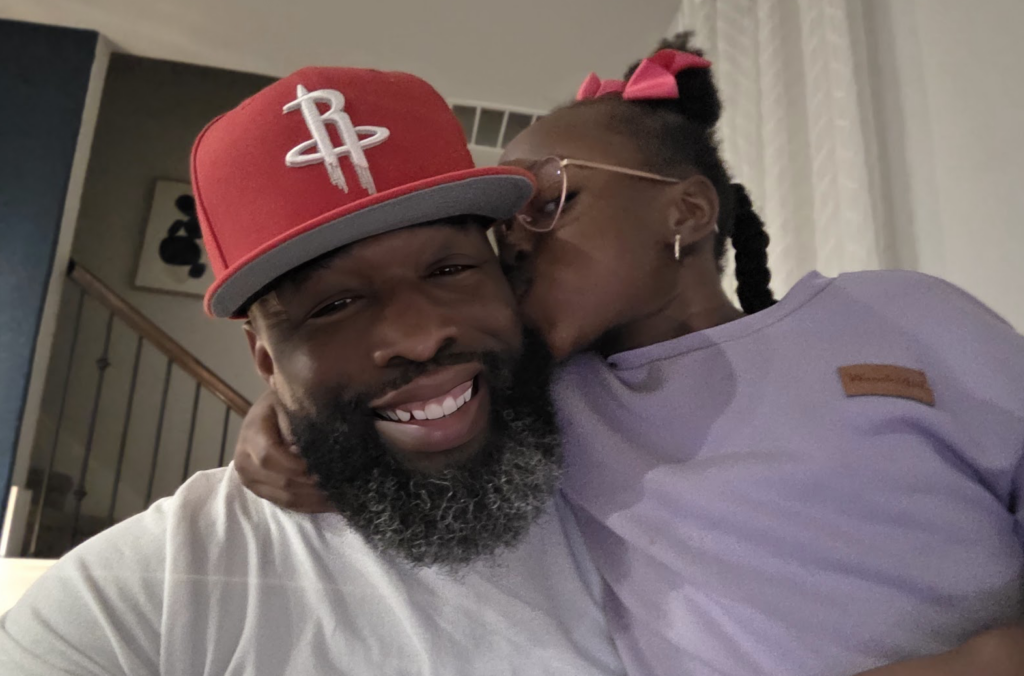
How did surviving foster care and abuse affect the way you learned to trust, love, and connect with your children?
Surviving those years taught me to pay attention to detail, because in a group home nobody’s coming to check if your bed’s made or your teeth are brushed. You learn to do it yourself, consistently, without being told. That discipline followed me straight into the military. They don’t hand responsibility to the soldier who needs constant follow-up, they hand it to the one who’s already conditioned to handle the small things without being reminded. That’s where trust starts for me, in the details, in whether what somebody says matches what they actually do.
As a father, that shows up as me checking. My daughter will sit in a bath for ten minutes playing and then splash a little water on herself and call it washed. So I check. Same with making her bed, same with brushing her teeth all the way, not just the front ones. Some people would call that extra. I call it the difference between raising a kid and waiting for a kid to raise themselves.
And honestly, that awareness is what frustrates me most about parenting in general right now. A lot of adults are busy building their own life, their own image, especially with social media, and they forget that kids need you poured into them, not just instructions handed to them. You can’t tell your child to go read a book if you can’t remember the last book you finished. You can’t tell them to go run laps if they’ve never once seen you move. Kids don’t build resentment from boundaries, they build it from watching an adult demand things they never do themselves. Trust, for me, starts with being someone my kids can actually watch and learn from, not just someone who gives directions from the couch. That’s the standard I hold myself to, because it’s the standard nobody held for me.
You went from a difficult childhood to 20 years in the Army and ultimately became a CW2 with a Bronze Star. What lessons from fatherhood and family helped you navigate that journey?
I didn’t have fatherhood to draw lessons from going into the Army, I had the absence of it. Everybody builds their idea of fatherhood from somewhere, the Huxtables, a pastor, a hustler on the block, whoever’s in front of them. But when you don’t have a father yourself, nobody ever taught you how to be one. You’re not pulling from a blueprint, you’re feeling around in the dark, learning predicament by predicament. That’s why you’ll notice with a lot of men, the third kid gets the version of the father who’s finally figured some of it out. The first one was the trial run nobody asked to be.
What I carried into the Army instead of a blueprint was something the group homes taught me early: nobody’s coming to check on you, so you’d better already have it handled. Bed made, business squared away, before anyone has to ask twice. That wasn’t something basic training installed in me, I walked in with it.
What fatherhood later taught me, once I had my own daughters and had to figure it out in real time with no map, is that every household is different and there’s no single right way to father. The stay-at-home dad and the man grinding in corporate America are both fathers, just running different terrain. What stays constant is the thing the Army also demands: show up for the details nobody’s watching, and the big things, rank, trust, responsibility, start finding you. A Bronze Star doesn’t happen because one day you decided to be brave. It happens because every ordinary day before that, you did the unglamorous work of being reliable. Family and the Army taught me that from two different directions, and honestly, fatherhood is still teaching it to me, one kid, one mistake, one adjustment at a time.
Military service requires discipline and sacrifice. How have those qualities influenced the way you parent?
Discipline in the military isn’t about yelling or rigidity, it’s about consistency when nobody’s watching and follow-through when it’s inconvenient. That translates directly into how I parent. I don’t discipline my daughters out of anger, I discipline them out of consistency, the same standard today as yesterday, whether I’m tired, stressed, or having a good day. Kids don’t need a parent who’s strict sometimes. They need a parent who’s predictable, because predictability is what safety actually feels like to a child.
Sacrifice is the other half of it. Deployments taught me sacrifice isn’t a single dramatic moment, it’s thousands of small absences you make up for in other ways, a call instead of a hug, a letter instead of a bedtime story. As a father, sacrifice looks like showing up even when it’s inconvenient, even when I’m exhausted, even when co-parenting makes it harder than it should be. The Army taught me that discipline without sacrifice is just rules, and sacrifice without discipline is just guilt. You need both. My daughters don’t need a perfect father. They need one who’s disciplined enough to be consistent and willing enough to sacrifice what’s comfortable so they never have to wonder if I’m really there for them.
What does being a strong Black father mean to you, particularly when your own childhood didn’t give you the example you needed?
Being a strong Black father means breaking a pattern without a blueprint for what’s supposed to replace it. Nobody handed me an example, so I had to build one from the inside out, piece by piece, out of what I refused to repeat and what I decided I’d give instead. For me it means being present when presence was never modeled for me, being patient in a system that isn’t built to be patient with Black fathers, and refusing to let what I didn’t get become what I don’t give. Strength isn’t the absence of struggle. It’s showing up disciplined and consistent in spite of never once seeing it done right in front of me.
How have you talked with your children about the difficult parts of your past without allowing your trauma to become theirs?
My past is mine to carry, not theirs to inherit. I’m honest with my daughters in ways that fit where they are, age-appropriate, never using my pain to make them feel responsible for my healing. What I share is the lesson, not the weight. I’ll tell them why I’m protective, why I check the details, why patience matters to me, without handing them the specifics of what put those instincts in me. My job is to be the wall that stopped the cycle, not a bridge that carries it forward into them.
Your story is about survival, but it’s also about becoming something beyond what happened to you. What do you hope your children learn from your journey?
I hope they learn that where you start doesn’t get the final word on who you become. I hope they see that surviving something isn’t the same as being defined by it, and that resilience is a decision you make daily, not a trait you’re born with. Most of all, I want them to know that whatever hard season comes for them, they come from someone who turned his worst chapter into fuel instead of an excuse. That’s their inheritance. Not the hardship. What I built out of it.
If you could sit down with the 11-year-old version of yourself today, what would you tell him about the man, father, and leader he would eventually become?
I’d tell him the fear he’s using to survive right now is going to become discipline. The awareness that feels like a burden is going to become a gift he gives his own kids one day. I’d tell him he’s going to wear a uniform, earn a Bronze Star, and become a man that eleven-year-old couldn’t have pictured, not because someone rescued him, but because he refused to stay down. I’d tell him: you’re not broken, you’re being forged. Keep going. Everyone who was supposed to protect you failed, but you’re going to become the protection you needed, for yourself and for four little girls who are going to be better off because you survived.
What’s next for you and how can people follow your journey?
I’m continuing the mission that started with This Ain’t About God: Book 1, The Survival Years, with more books in the trilogy on the way, alongside building Vet Med Logistics and Toughlove Global Leadership Group. I want to keep speaking, keep writing, and keep being proof that where you started isn’t where you have to stay.
Book: https://a.co/d/0IqgwVW
Author page: https://www.amazon.com/author/
Content note: This memoir includes descriptions of child abuse and strong language.