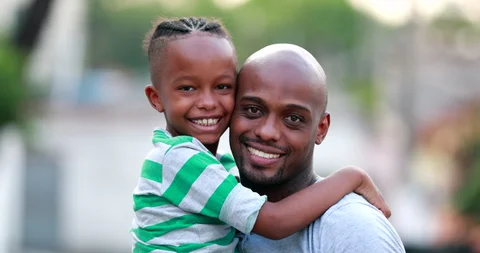

Some version of it happens to almost every dad. Your son catches you adjusting your hat in the mirror, or he notices the thinning spot you’ve been quietly pretending isn’t there. Then comes the question, half curious, half nervous, “Dad, am I going to go bald too?” That moment is your cue. The genetics conversation about hair loss doesn’t have to be awkward. With a little honest science and some real-dad honesty, it can actually be one of the more useful talks you’ll ever have with your boy.
What Does Baldness Actually Have to Do With Dad?
Male pattern baldness — the medical term is androgenetic alopecia — is the most common form of hair loss in men, affecting roughly 50% of males by age 50. It’s driven by a combination of genetic sensitivity and a hormone called dihydrotestosterone (DHT), which gradually shrinks hair follicles until they stop producing visible hair.
The important thing to understand: this is a polygenic trait. That means no single gene flips a bald switch. Dozens of genetic variants, inherited from both sides of the family, nudge the risk up or down. Your son isn’t looking at a mirror image of your future — he’s working with a probability, not a sentence.
Does Hair Loss Really Come From Your Mother’s Side?
The mother’s-side myth is one of the most persistent in men’s health, and it’s only partially true. The androgen receptor gene, one key piece of the puzzle, does sit on the X chromosome, which sons inherit from their mothers. But research consistently shows that paternal family history is also a significant predictor. A large twin study found that genetics account for roughly 80% of the variation in male pattern hair loss. Baldness runs in families because multiple genes from both parents are involved, not because of one magic gene from grandma’s side.
This is also worth exploring through the lens of how sons process physical appearance. The way you talk about your own body, your own hair, your own aging, becomes part of how your son frames his. What you model matters as much as what you explain.
When and How to Have the Genetics Conversation
The right time is when your son brings it up, or when you notice him noticing. Don’t force it at the dinner table out of nowhere. The conversation tends to land best when it happens naturally: during a haircut, while watching a movie with a bald character, or when he comments on a photo of you from 10 years ago.
Keep the science accessible without dumbing it down. Teens can handle the basics: genetics, DHT, follicle sensitivity. What they need from you isn’t a lecture but honesty. “Yeah, there’s a real chance it runs in the family. Let me tell you what that actually means.”
What Should a Dad Actually Say?
Start with what’s true and what’s uncertain. Tell him baldness involves many genes from both sides, that it’s not guaranteed, and that early thinning, if it shows up, isn’t a crisis. Then move into what he can actually control. Stress, poor sleep, and nutritional deficiencies can accelerate hair loss in men who are already genetically at risk. Addressing internal factors like vitamin D, iron, and biotin levels is a real conversation worth having alongside the genetics talk. The goal isn’t to make your son anxious: it’s to make him informed.
What Role Does the Father Play Beyond Biology?
Here’s where fatherhood does something genetics can’t. Your son may or may not inherit your hairline. But he will absolutely inherit your attitude toward it. If you’ve made peace with your own hair loss and carry yourself with confidence rather than shame, that’s what gets passed down emotionally.
Fathers who are present, candid, and self-assured about their bodies show their sons how to handle uncertainty and impermanence. Hair is a small thing in isolation, but how a man handles something he can’t control reveals a lot about his character. You have the opportunity to demonstrate that.
How Does a Dad Model Confidence?
Confidence in this context isn’t bravado. It’s the quiet kind: not making hair loss a source of jokes, but not making it a source of dread either. Research consistently shows that fathers impact children’s lives and shape their sons’ self-image and sense of worth. How you talk about your own appearance is part of that. A son who watches his father shave a thinning head with ease, or who hears his dad say, “It’s genetic, and it’s fine,” learns something he’ll carry for decades.
What Can a Son Actually Do About It?
Plenty, especially early on. If your son starts noticing thinning in his late teens or early twenties, it’s not time to panic. It’s time to be proactive. Several non-prescription approaches can slow progression when started early:
- Minoxidil (Rogaine): An FDA-approved topical treatment that helps stimulate follicle activity. Most effective when started early.
- Nutritional support: Iron, vitamin D, and zinc deficiencies are all linked to accelerated shedding. Getting bloodwork done is an easy first step.
- Stress management: Chronic stress raises cortisol, which can trigger or worsen telogen effluvium — a separate but related form of hair loss.
- Gentle hair care: Avoiding excessive heat, harsh chemicals, and tight styles that pull on follicles helps limit damage-related shedding.
- Scalp health: Keeping the scalp clean and well-circulated supports the environment where follicles do their work.
According to the American Academy of Dermatology, early intervention is consistently more effective than waiting until significant loss has occurred. The biology may be in play early, but its visible effects can often be delayed.
When Is It Worth Talking to a Doctor?
Sooner than most men think. A dermatologist can assess the pattern of loss, rule out other causes (like thyroid issues or alopecia areata), and discuss treatments that go beyond over-the-counter options. As part of your broader role as a health advocate for your son, navigating the health care maze is one of the most practical things a dad can model. This conversation doesn’t have to wait until there’s a visible problem.
Pass Down More Than a Hairline
The genetics conversation about balding is really a conversation about how men handle what they can’t fully control. Your son is watching you. He’s taking notes on whether aging is something to fight with embarrassment or accept with confidence. You get to set that frame. Be honest about the science, be clear about the options, and be easy about the whole thing. That combination is exactly what good fatherhood looks like. If the topic comes up soon, lean into it. You probably know more than you think, and your son needs to hear it from you first.