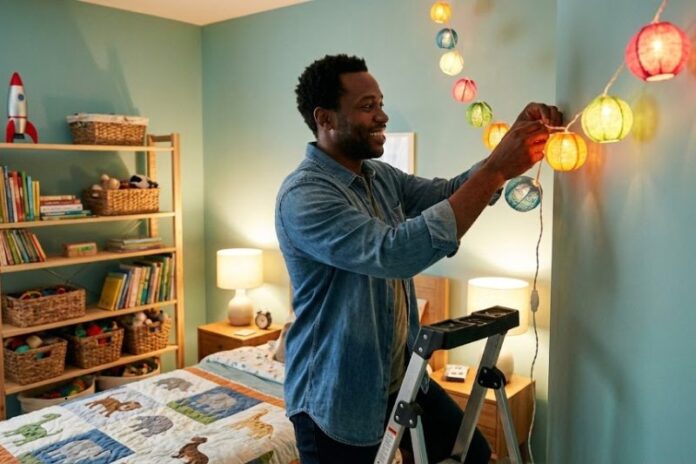

Lighting can turn a kid’s room into a place for play, study, and calm sleep. The trick is choosing the right mix of fixtures and controls so the space changes with the day.
This guide breaks lighting into simple layers you can set up quickly. With a few smart choices, the room feels safer, brighter, and easier to wind down at night.
Balance Play, Study, And Sleep With Layers
Start with ambient light that spreads evenly without glare. Add task lights at desks and reading nooks. Finish with small accent lamps that make forts, shelves, or art feel special.
Use a ceiling fixture for general light and a floor lamp to fill shadows. A gooseneck desk lamp keeps worksheets bright without lighting the whole room. A small clip light can turn the bunk into a cozy reading spot.
Check sightlines from the pillow. If a bulb shines directly into the eyes, swap the shade or move the lamp a few inches. Comfortable light helps bedtime routines stick.
Make Fixtures Safe, Durable, And Kid-Friendly
Pick sturdy shades and bulbs that stay cool to the touch. Corded lamps should be routed behind furniture and along walls. Add outlet covers where plugs are within reach.
Choose fixtures that can grow with the room. A simple ceiling base can accept many shades over the years. Desk lamps with replaceable bulbs keep costs down when tastes change.
Compare sizes and mounting options before you buy. If you are exploring dimmable kits and kid-safe lamps, options at https://www.simplelighting.co.uk/ can help you think through scale and brightness for your layout. After you shortlist parts, check clearances around beds, bookshelves, and doors.
Make It Fun Without Adding Clutter
Use a single accent lamp to highlight a poster, shelf, or plant. Colored shades or patterned fabric can change the mood without repainting. Keep cords hidden so the look stays clean.
Try one quick list to guide choices:
- Pick one ambient, one task, and one accent light.
- Choose warm bulbs for night and neutral for day.
- Label switches so kids remember each scene.
Rotate small accessories with the seasons. A string of soft pin lights can be cozy in winter, then swap to a bright reading lamp for summer projects. Change just one element at a time so routines stay familiar.
Warm Evening Light, Cool Focus For Daytime
Keep daytime light crisp for focus. Cool to neutral bulbs help kids see details during homework and crafts. At sunset, switch to warm tones that relax the room.
Plan for three scenes: homework, play, and wind-down. Homework uses a task light plus moderate ambient. Play bumps up ambient and accents, while wind-down dims everything except a small bedside lamp.
Test the color temperature at night. If a corner still feels harsh, replace a bulb before moving furniture. Warm light in the last hour before bed helps bodies shift toward sleep.
Smart Controls That Kids Can Use
Keep controls obvious and low-friction. One wall dimmer for the main light and a simple button for a bedside lamp are enough. A small label near each switch helps guests and babysitters.
Start with easy automations that support routines. A welcome scene turns on the desk lamp at homework time. A night mode nudges lights to warm and dim 30 minutes before bed.
Use a single app or remote to avoid confusion. Name devices by location, like Bed Lamp or Desk Light. If a control fails, kids should still be able to flip a physical switch.
Nighttime Routines That Protect Sleep
Create a gentle path to sleep with light. Keep a warm bedside lamp for reading and a tiny night light for short wakeups. Avoid bright ceiling lights after wind-down begins.
One national sleep resource reports that many kids struggle to fall or stay asleep, with estimates ranging from 15 to 25 percent. Light discipline helps by signaling consistent cues each night. Keep screens out of the routine, and let the room grow darker as bedtime nears.
Balance comfort with safety. A motion night light near the door prevents stumbles. If a child wakes often, try lowering the brightness a notch to reduce stimulation.
Kids’ rooms work best when lighting follows the day. Bright, focused light supports homework and play, while warm, dim light helps bodies slow down. With safe fixtures and clear controls, the space feels friendly and calm.
Start small, then build habits. Add one task lamp, one dimmer, and one bedtime scene. Those simple steps make bedtime smoother, mornings faster, and the room more fun to use.