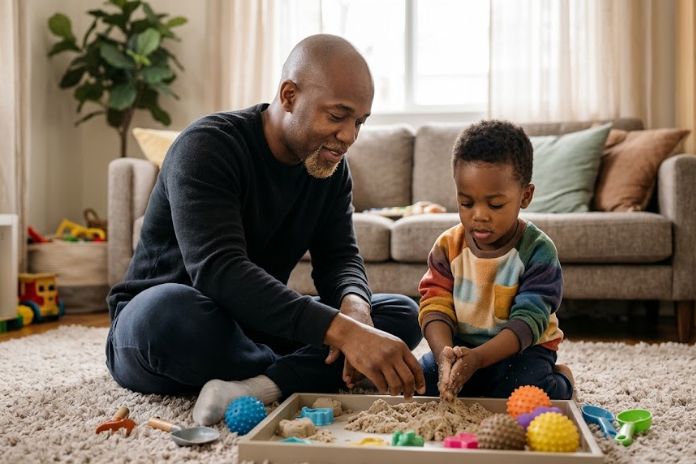

You pick your child up from school. They were fine all day, according to the teacher. But the moment they get home, everything falls apart. Tears over a snack. A shout over a sibling. A meltdown about homework. If this sounds familiar, you are not alone. Many parents see this after-school pattern, and dads can play a big role in helping kids through it.
Quick answer: Dads can help kids unwind after school by giving them a calm, low-pressure space to decompress, offering simple sensory activities like squeeze toys or play dough, and spending relaxed time together without questions or demands. Shared hobbies, like collecting, build connection, and when dads model healthy ways to handle stress, kids learn to do the same.
In this article, we explain “after-school restraint collapse,” show how to create a quiet decompression corner at home, share how collecting can become a father-child hobby, and explain why it matters for dads to model healthy stress management.
The “After-School Restraint Collapse” and How Dads Can Help
After-school restraint collapse is a term used to describe what happens when children hold in their feelings all day at school, then release them once they feel safe at home.
Why it happens
At school, children work hard to follow rules, sit still, listen, get along with others, and manage new challenges. That takes a lot of energy. When they get home to the people they trust most, they finally let go. The meltdown is not a sign of bad behaviour. It is often a sign that they feel safe with you.
Signs of restraint collapse
- Crying or getting upset over small things
- Snapping at siblings or parents
- Refusing to talk about their day
- Wanting to be alone
- Becoming very hungry, tired, or irritable
How dads can help
- Do not ask too many questions right away. “How was your day?” can feel like pressure. Give them time.
- Offer a snack and water. Hunger and thirst make everything harder.
- Keep the first 30 minutes calm. Save homework and chores for later.
- Be present. Sit nearby, even if you are not talking.
- Offer a calm activity. Something gentle for their hands and mind.
| What kids may need | How dad can help |
|---|---|
| Rest | Quiet time before homework |
| Food | A healthy snack ready |
| Comfort | Calm presence and a hug if wanted |
| Space | Let them talk when ready |
| Sensory calm | Soft toys, play dough, or drawing |
Creating a Quiet Decompression Corner at Home
A decompression corner is a small, calm space where children can relax after school. It does not need to be big or fancy. It just needs to feel safe and peaceful.
What to include
- Soft seating: Cushions, a beanbag, or a small blanket.
- Calm lighting: A small lamp or fairy lights.
- Books: A few favourite picture books or comics.
- Sensory items: Squeeze toys, a soft blanket, or play dough.
- Headphones: For quiet music or simply to block noise.
Rules for the corner
- It is a calm space, not a punishment space.
- Kids can go there whenever they need a break.
- No questions or demands while they are there.
Why sensory items help
Squeezing, pressing, or kneading something soft can help children release tension from their day. It gives their hands something to do while their minds slow down.
Some brands grew from exactly this kind of family moment. The story behind Taba Squishy, for example, goes back to a parent and child kneading soft dough together and noticing how calming it felt. That simple idea led to soft silicone squeeze toys that recreate the feeling. The classic taba squishy paw is a great choice for a decompression corner. Its soft paw shape and squishy toe beans are gentle to press, quiet to use, and comforting to hold after a long school day.
Turning Collecting into a Fun Father-Child Hobby
Shared hobbies are one of the best ways for dads and kids to connect. Collecting is especially great because it is simple, ongoing, and full of small moments of excitement.
Why collecting works for dads and kids
- It gives you something to talk about. Kids love sharing what they know.
- It teaches patience. Not every item comes right away.
- It builds planning skills. Kids learn to make lists, save money, and set goals.
- It creates traditions. For example, a small new piece after a good school week.
- It is fun. Opening a new item together is exciting for both of you.
How to start
- Pick a collection together. Let your child lead.
- Make a checklist. Use a printed list or a notebook.
- Set simple rules. Decide how and when new items are added.
- Create a display. A small shelf or box for the collection.
- Celebrate rare finds. Make a big deal of special moments.
Using a rarity guide together
Many collectible series have official rarity guides that show every design and how hard each one is to find. Looking through the guide together is a fun activity on its own. Kids can point out their favourites, plan which ones to look for next, and learn how rarity works.
One fun goal for collecting dads and kids is finding a glitter dumpling. These sparkly editions are among the harder ones to find, so checking the rarity guide together and celebrating when you finally get one becomes a memorable shared moment.
Why Modeling Healthy Stress Management Matters for Fathers
Children learn far more from what we do than from what we say. When dads show healthy ways to handle stress, kids learn that it is normal to have big feelings and that there are good ways to manage them.
What modeling looks like
- Naming feelings: “I had a stressful day at work. I’m going to take a few minutes to calm down.”
- Using calming tools: Taking deep breaths, going for a walk, or squeezing a stress toy.
- Taking breaks: Showing that rest is important.
- Apologizing: “I’m sorry I raised my voice. I was frustrated, and I should have taken a break.”
Why it matters
- Kids learn that everyone feels stress, including dads.
- They see that strong people can also be gentle with themselves.
- They learn practical calming skills they can use at school.
- It builds trust and open communication.
Simple daily habits for dads
- Take a few deep breaths before walking in the door after work.
- Share one high and one low from your day at dinner.
- Do a calm activity with your child, such as reading or drawing.
- Talk openly about feelings in simple words.
Note: If your child’s after-school meltdowns are frequent or intense, or if you are worried about their wellbeing, speak with their teacher, pediatrician, or a family counselor for support.
Key Takeaways
- After-school restraint collapse happens when kids release feelings they held in all day.
- Dads can help with a calm first 30 minutes, snacks, presence, and gentle sensory activities.
- A simple decompression corner gives kids a safe space to unwind.
- Collecting can become a fun, ongoing father-child hobby.
- When dads model healthy stress management, kids learn to manage their own feelings.
Frequently Asked Questions
What is after-school restraint collapse?
It is when children hold in their emotions all day at school and then release them at home, often through tears, frustration, or meltdowns.
How can I help my child calm down after school?
Give them a snack, keep the first part of the afternoon calm, avoid too many questions, and offer a quiet sensory activity.
What should go in a calm-down corner?
Soft seating, gentle lighting, books, headphones, and sensory items like squeeze toys or a soft blanket.
Why is it important for dads to show their feelings?
When dads talk about and manage their feelings in healthy ways, children learn that emotions are normal and manageable.
Final Thoughts
The after-school hours can be tough, but they are also a chance to connect. With a calm space, simple sensory play, shared hobbies, and a dad who shows healthy ways to handle stress, kids can unwind and feel truly supported. Sometimes the best thing a dad can do is simply be there, sit down, and squeeze a soft toy together.