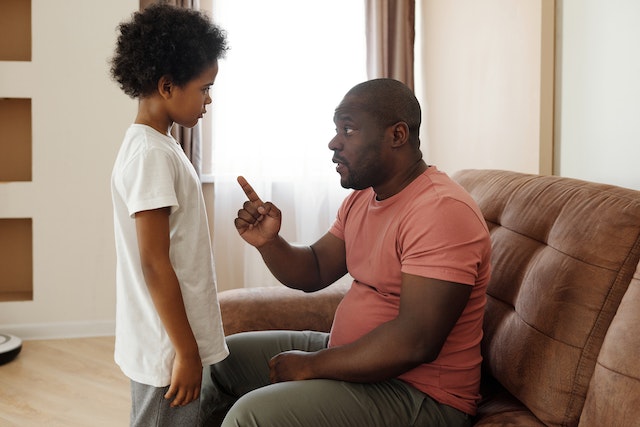

A slammed cabinet door or a raised voice over something small rarely gets forgotten the way a father hopes it will. Your son watching you lose your temper isn’t absorbing an isolated bad moment. He’s absorbing a lesson about what anger looks like, how conflict gets handled, and what a man does when he feels overwhelmed. Kids remember these moments far longer than most parents realize. They draw conclusions from them long before they have the words to explain what they noticed. A single outburst rarely undoes years of good parenting, but a pattern of them teaches something a son carries for a long time, sometimes well into his own adult relationships.
What Does Your Son Actually Learn From Watching You Lose Your Temper?
Your son watching you lose your temper learns primarily through observation, not instruction. Boys pick up far more from what a father does under stress than from anything he says about staying calm.
He notices whether frustration turns into yelling, silence, or something physical. He notices whether his father apologizes or pretends nothing happened. Even the smallest details register: the tone of voice, how long the tension lasts, whether anyone checks in afterward. Over time, these small moments add up into a template for how emotions get handled at home. Emotionally healthy fathers raise emotionally healthy boys. Sons learn regulation the same way they learn everything else in childhood, by watching someone they trust do it first.
Can This Pattern Actually Be Changed?
This pattern can absolutely be changed, and recognizing it is usually the hardest part. Most fathers who lose their temper aren’t choosing cruelty. They’re reacting from stress, exhaustion, or old habits nobody ever helped them unlearn, often patterns picked up from their own fathers decades earlier.
Choosing to learn how to manage anger isn’t an admission of failure as a parent. It’s one of the more direct ways to interrupt a pattern before a son grows up believing this is simply what fathers do. Therapy built around anger management gives fathers tools for identifying triggers early. Catching frustration at that stage, before it turns into an outburst, is what a son actually ends up remembering.
How Do Sons Specifically Absorb a Father’s Anger Differently?
Sons often absorb a father’s anger as a model for their own future behavior, more directly than daughters tend to in many households. Boys are frequently raised to believe that anger is one of the few emotions they’re allowed to show openly, while sadness or fear get discouraged from an early age.
That expectation makes a father’s temper especially influential. Unresolved pain passed down through generations often traces back to exactly this kind of modeling. A son inherits not just his father’s coping mechanisms, but the emotional blueprint underneath them. A son doesn’t need a lecture about anger to learn it. He just needs to watch it happen a few times, often without either of them fully realizing a lesson is being taught at all.
What Are the Signs a Son Is Internalizing His Father’s Anger?
Signs a son is internalizing his father’s anger often show up in behavior rather than words, and they’re usually easier to spot in hindsight than in the moment. A few patterns worth watching for:
- Mimicking a raised voice or slammed doors during his own frustration
- Going unusually quiet or withdrawn after witnessing an outburst
- Apologizing excessively for small mistakes, as if trying to prevent anger
- Showing aggression toward siblings or peers during minor conflicts
- Asking whether Dad is mad, even when nothing seems wrong
None of these signs means permanent damage has been done. They’re simply feedback. They tend to ease once a father starts responding differently, sometimes within just a few weeks of consistent change.
How Can Fathers Model Something Different?
Fathers can model something different by narrating their own emotional process out loud, rather than hiding it or exploding through it. Saying “I’m frustrated right now, so I’m going to take a breath” teaches a son more than staying silently calm ever could, since it shows the actual mechanics of self-regulation in real time.
This kind of modeling doesn’t require perfection. Modeling healthy emotional behavior for children means showing a son that frustration is normal and survivable, not that it never happens at all. A father who loses his temper occasionally but repairs it well still teaches a healthier lesson. That beats a father who never shows emotion but explodes without warning.
What Does the Research Say About Parental Anger and Child Behavior?
Research consistently links a parent’s difficulty managing anger to worse conflict outcomes with their children. The connection isn’t anecdotal. It shows up clearly across multiple studies, spanning different age groups and family structures.
A study on parental anger management and adolescent behavior found that parents who struggle to regulate anger tend to have more recurring conflict with their children. Children in those homes often model the same poor conflict resolution strategies. The pattern isn’t fixed once it starts. It’s simply the direction things head without intervention.
Breaking the Pattern Before It Passes On
Your son watching you lose your temper today is quietly building his own future template for handling frustration. That template gets built whether or not it happens consciously. Fathers don’t need to eliminate anger entirely to raise emotionally healthy sons. They need to model what happens after it: an apology, a calmer approach next time, a willingness to name the feeling instead of acting on it unchecked. Start there, one moment at a time. The pattern a son carries forward starts to look a little different than the one he was handed, and that shift can begin with something as small as one calm apology after one hard evening.