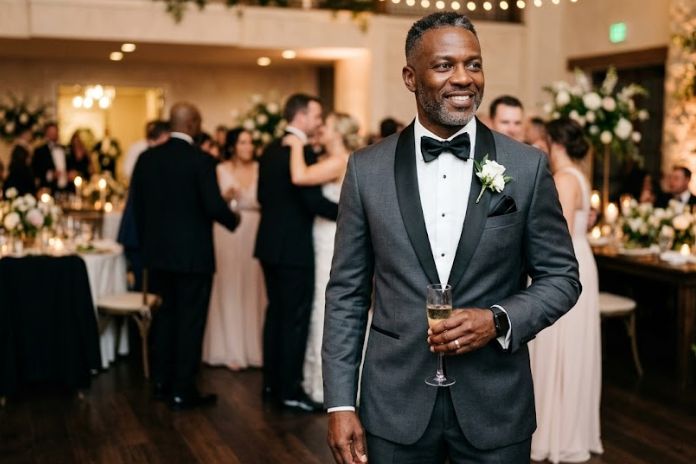

At some point between walking your daughter down the aisle and rewriting your toast for the fourth time, someone’s going to ask what you’re wearing. It’s a small question that carries more weight than it should — this is one of maybe three or four days in your life where how you show up ends up in photos people look at for decades.
This isn’t the biggest decision of the wedding. It’s just one of the few you can actually control. Get it right early and it’s one less thing pulling your attention away from the day itself.
You’re Not the Groom, and You’re Not a Regular Guest
Your role sits in an odd middle ground. You’re close enough to the front row that people notice what you wear, far enough from the spotlight that trying to outdress anyone would be a mistake. The goal is simple: look like you belong in every photo, polished and present, without pulling focus from the couple.
Essence has covered Black weddings for years, and one thing shows up again and again in those stories — the family isn’t background scenery. Parents are part of what’s being told that day. That’s the real reason what you wear matters, more than any style trend.
Let the Dress Code Make the Call
Most fathers overthink this part. The invitation should decide it for you, not personal preference.
Black tie on the invitation, or a formal evening ceremony starting after 6 p.m.? That calls for a proper Tuxedo. A well-cut tux in classic black with a crisp white shirt reads as intentional, not flashy — which is the whole point of dressing for someone else’s day.
Semi-formal or daytime wedding? A dark suit in navy, charcoal, or black with a solid tie gets the job done without overshooting what the occasion actually calls for. Save the tux for when it’s genuinely warranted.
Quick Reference: What to Wear, by Formality
| Wedding Formality | Time of Day | Recommended Attire | Shoes |
| Black tie | Evening | Tuxedo, black or midnight blue | Patent leather oxfords |
| Formal | Evening | Dark suit or tuxedo | Polished leather dress shoes |
| Semi-formal | Afternoon/evening | Suit — navy, charcoal, or black | Leather oxfords or derbies |
| Casual/outdoor | Daytime | Sport coat with dress pants | Leather loafers |
Treat this as a starting point, not a script. The couple may have their own preferences about how everyone should look together in photos, and that conversation is worth having before you buy anything.
Fit Beats the Label Every Time
A $200 suit that fits will beat an $1,800 one that doesn’t, every time. Shoulders should sit flat, no bunching. Sleeves should stop where your wrist meets your hand, showing maybe half an inch of shirt cuff. Trousers should break cleanly at the shoe instead of pooling at your ankles.
Get measured eight to twelve weeks out if you’re buying or renting — earlier if your size has changed since the last time you wore a tux. Tailoring takes time, and the week of the wedding is the wrong moment to discover your jacket’s too tight across the back in every single photo.
A lot of men skip the second fitting because the first one felt fine. Don’t. Bodies shift a little over two or three months, and the shoes you actually plan to wear can change how the trouser break looks entirely. Bring them to the final fitting instead of guessing.
What You Can Skip
Not every accessory earns its place. Cufflinks are worth it if you’ll actually wear them again — a wedding is a decent excuse to finally use the pair someone gave you years ago. A vest under a tuxedo jacket is usually unnecessary unless you’re removing the jacket at some point in the evening, which, at your own kid’s wedding, you probably aren’t.
Skip anything overly trendy. A wedding photo album isn’t the place for a suit that reads as “2026” the moment you look back at it in five years. Classic cuts age better than whatever’s trending this season, and that matters more here than almost anywhere else you’ll wear a tux.
The Details Nobody Mentions Until the Photos Come Back
A white linen pocket square, simply folded, is nearly impossible to mess up. Match your tie or bow tie to the wedding’s colors without disappearing into them completely — coordinated, not camouflaged. If there’s a boutonnière, get it pinned before the ceremony starts, not fumbled with during the processional walk.
None of this is really about being the sharpest-dressed man in the room. It’s about being present in a way that photographs — and feels — like you meant to be there. Years from now, your daughter or son won’t remember the label inside the jacket. They’ll remember that you showed up looking like the day mattered to you.
If showing up fully for the milestones in your family’s life is something you’re already thinking about, Dear Fathers hosts events throughout the year built around exactly that.