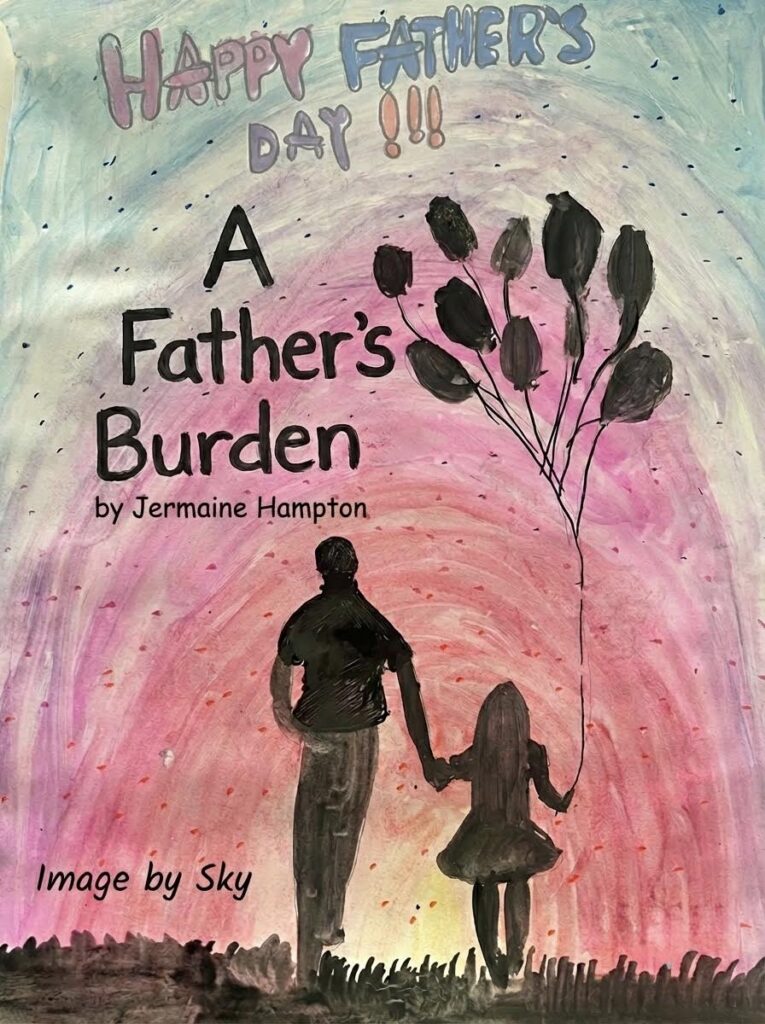

A Father’s Burden chronicles one father’s decade-long journey through the family court system as he fights to reclaim his daughter. Written with unflinching honesty, the memoir explores fatherhood, perseverance, and the personal cost of a system that too often overlooks the bond between a father and his child. It is a story of love tested by time, and of a parent who refused to give up.
“A Father’s Burden is a testament to faith, resilience, and a father’s unwavering love. It speaks to every father fighting through court battles, child support struggles, bias, and heartbreak, a reminder that when love leads, and faith holds firm, even the heaviest burden can become a testimony of victory, and that hope can still lead the way home,” said Jermaine Hampton, author of A Father’s Burden.
“This memoir is about healing, love, empathy, and faith. At the heart of the story is a father and his daughter who never gave up. It is encouraging to see a father hold on to hope and keep believing, no matter what was thrown in his path.
Tell the Dear Fathers community more about who you are and what you do.
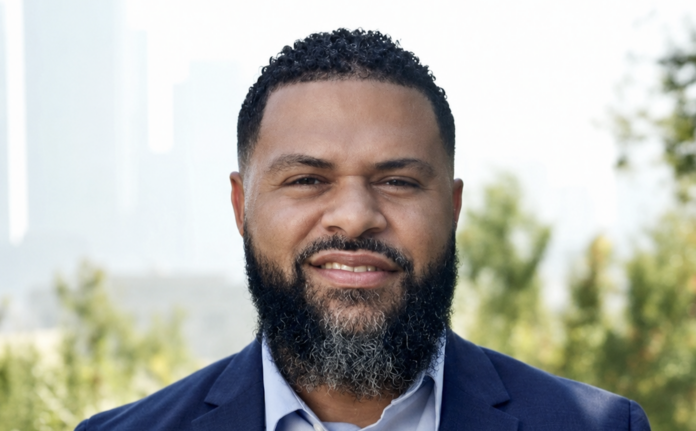
I am currently a Vice President at LAEDC, an economic development nonprofit serving the Los Angeles region. In that role, I work to support business growth, job creation, and economic opportunity across communities. I am also an entrepreneur with multiple family ventures, and at the center of everything I do is my role as a father. My work, my ambition, and my purpose are all connected to building something meaningful for my family and helping create opportunities that last beyond me.
What inspired your new book, a father’s burden?
My daughter Sky inspired this book. My journey as a father has lasted more than 15 years and, in many ways, is still ongoing. I wanted to tell the truth about what it feels like to fight for your child while navigating a system where men, especially Black men, are often stigmatized, misunderstood, or treated with bias.
A Father’s Burden came from pain, but it also came from love. I wanted to give voice to fathers who are trying, fathers who are present, and fathers who are fighting every day to be in their children’s lives.
What are the top three takeaways you want readers to get from your book?
The three biggest takeaways are love, family, and perseverance.
When life becomes difficult, those are the things that keep you grounded. Love gives you the reason to keep going. Family gives you the support to survive the hard seasons. Perseverance gives you the strength to keep fighting even when the situation feels unfair or impossible.
I want readers to walk away knowing that no matter how heavy the burden becomes, giving up is not an option when your children and your purpose are on the line.
Describe the emotional and mental toll of fighting for your child for ten years.
Honestly, it took me in and out of depression. Fighting for your child over a long period of time is emotionally exhausting, especially when you feel like the system is not hearing you.
There were situations that were embarrassing, painful, and professionally damaging. Being arrested, dealing with false accusations, and having my license suspended even though child support was already being taken directly from my paycheck put me in very difficult positions. The systems were not moving in lockstep, and because of those delays, I found myself dealing with consequences that should not have happened.
Beyond all of that, the hardest part was knowing my daughter’s safety and stability were not fully in my control. As a father, that is a heavy thing to carry. You are trying to stay strong, keep working, provide for your family, protect your name, and still fight for your child without breaking down. That kind of pressure changes you, but it also reveals how strong your love really is.
What is the biggest disconnect between Black fathers and the court system when fighting for their children?
The biggest disconnect is the stigma. Too often, Black fathers are placed into one category before the facts are even fully heard. I felt like I was viewed no differently than fathers who were not trying, even though I was present, responsible, and fighting to protect my daughter.
That bias can have real consequences. In my case, I believe it put my daughter in unsafe situations because it took years and mountains of evidence before the court began to fully recognize what I had been saying all along.
Black fathers should not have to prove their humanity before they are taken seriously. Our love, our presence, and our commitment should matter from the beginning.
How can fathers gain access to better resources to fight for their children?
That is actually one of the biggest issues: there are not enough resources for fathers. Many fathers do not know where to turn, what their rights are, or how to properly navigate the system.
I was blessed to have family support, and through my job I had access to legal insurance through ARAG, which was extremely helpful. But every father does not have that. We need more accessible legal resources, fatherhood advocacy groups, mentorship, education around custody and child support, and stronger community support systems.
Fathers should not have to fight alone, especially when they are trying to do right by their children.
Who is Jermaine as a father?
I am a hardworking, persistent, caring, and engaged father. I believe one of my greatest strengths is consistency. I show up. I stay involved. I give myself to my family and put them first.
Fatherhood is not something I take lightly. It is part of my identity. My children motivate me to keep growing, keep building, and keep becoming a better version of myself.
When fathers are intentionally engaged, how does that shape children’s development?
Children need the love, presence, and guidance of both parents. When that love is lopsided or one parent is missing, it can create a void. Sometimes that void shows up immediately, and other times it appears later in life through emotional struggles, identity challenges, or difficulty forming healthy relationships.
A father’s love is just as important as a mother’s love. It should not be treated as secondary. When fathers are intentionally engaged, children gain balance, confidence, structure, protection, and another example of unconditional love.
Our presence matters more than society sometimes admits.
How do you balance building a brand and business while being the best dad you can be?
Balance is hard, but I have been blessed. Because I have worked hard in my career, I have been able to create more flexibility for myself, and that flexibility allows me to be more present for my family.
I also try to make sure my work is connected to my purpose. Building a brand, growing businesses, and advancing professionally all mean more when they are tied to creating a better future for my children. I do not always get the balance perfect, but I make sure my family knows they are the priority.
What does legacy mean to you?
Legacy means leaving behind something that lasts for generations. It is bigger than money. Money can be part of it, but true legacy is about values, faith, character, opportunity, and the example you set.
For me, legacy is about building something my children can stand on. It is about showing them what perseverance looks like, what love looks like, and what it means to keep going even when life gets difficult.
What’s next for you, and how can people follow you and purchase your book?
With A Father’s Burden, my goal is to spread the message as far and wide as possible. I want this book to reach fathers, families, and anyone who has had to fight through adversity. Right now, people can download the digital copy at www.afathersburden.com, and I also plan to produce printed hard copies in the future.
Beyond the book, my family and I are focused on continuing to build our legacy here in Los Angeles. Professionally, entrepreneurially, and personally, we want to keep growing, creating opportunities, and helping our children move toward success.
This is just the beginning.